KAHO stands for KArlsHOrst
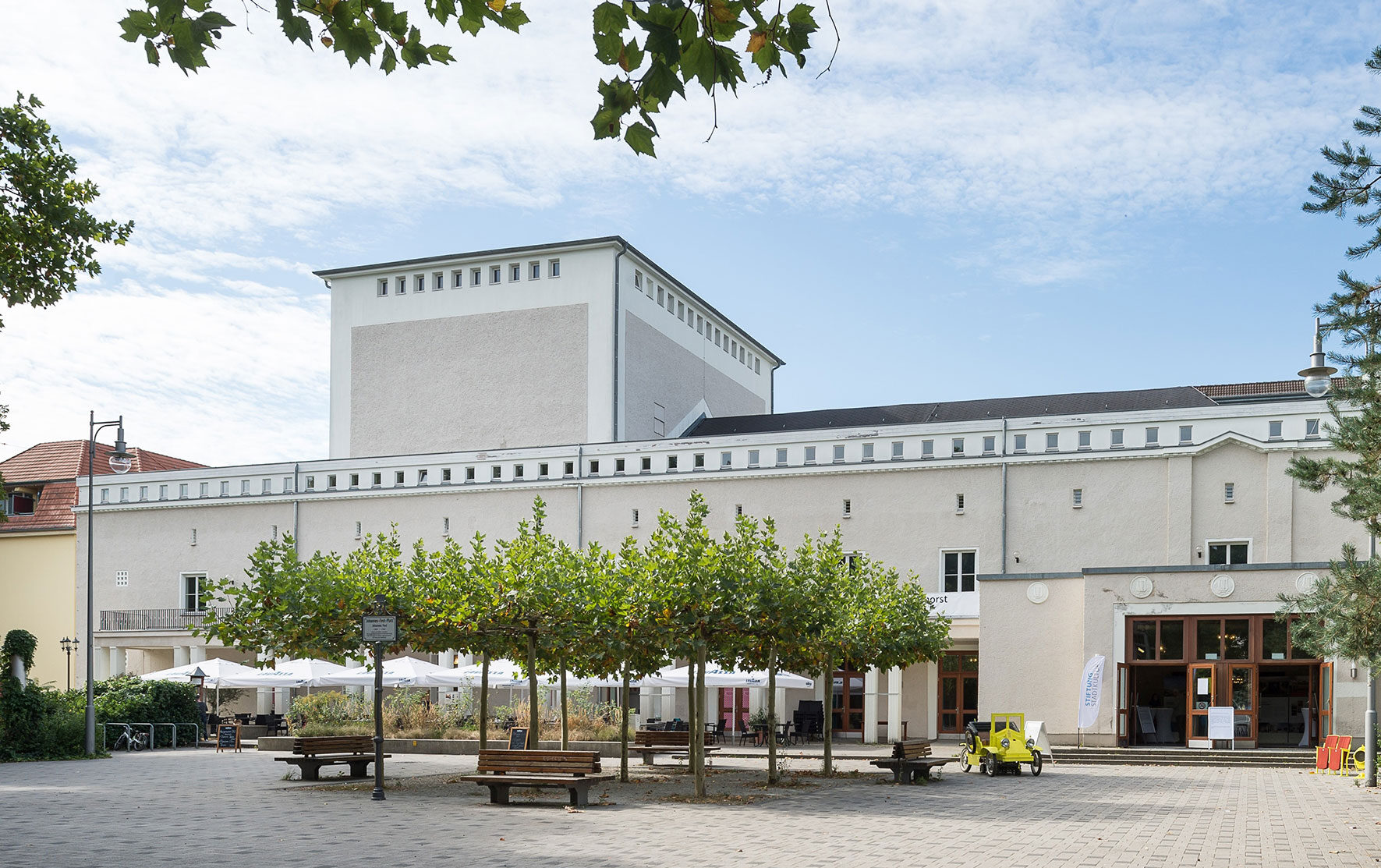
Das KAHO
The KAHO is a theatre that is no longer a theatre.
Built in 1948–1949, the building was used by the Soviet Army as an officers’ club until 1994 and subsequently served as a private theater. Since 2008, the stage, auditorium, and lobbies of the former Theater Karlshorst have stood unused. With the transfer of the landmark-protected building to the assets of the Stiftung Stadtkultur in 2018, a process of revitalization began. It is now set to be restored, renovated, and converted so that it can reopen in new splendor as a multifunctional venue in the heart of Berlin-Karlshorst under the name KAHO. Raum für Kultur. Prior to the start of the renovation phase, an interim program featuring approximately 100 events took place in 2021 and 2022, focusing on the building’s past and future. The interim use served, on the one hand, to temporarily revitalize the building, and on the other, to provide insights into potential structural challenges during the ongoing process. Since spring 2026, the KAHO has been a construction site. You can find all the information here.
History
A look behind the “Iron Curtain”
The building was constructed as “Dramatisches Theater Karlshorst” in 1948/49 at the command of the Soviet military administration as reparations payment by Germany.
Aktuelles
KAHO introduces itself. 5 interviews
The people behind KAHO provide insight into the ongoing process of reactivation: Thomas Felgenhauer talks about the role of the Stadtkultur Foundation in HOWOGE’s social commitment. Pirkko Husemann on the challenges of a dysfunctional theatre and the missing archive. Francesca Ferguson reports on the search for a mission statement in 2018/19. Lukas Staudinger discusses the complex construction project for the listed building ensemble. Svetlana Müller gives an outlook on the Russian-language contributions in the interim programme 2021.

